Fire tanks are essential components of fire protection systems, providing a critical water supply during emergencies. Regular inspections help ensure these tanks are safe, compliant with regulatory standards, and perform reliably when needed. This comprehensive fire tank inspection checklist is designed to guide facility managers, safety officers, and service professionals through the thorough inspection process, helping to maintain safety, compliance, and operational efficiency across Australian facilities.
Understanding Regulatory Compliance
Fire tank inspections are governed by established standards to ensure system reliability and legal adherence. In Australia, AS1851-2012 specifies routine service requirements for fire protection equipment, including water storage tanks. This standard mandates regular inspections, cleaning, and maintenance, compliance is vital not only for the safety of people and property but also for meeting insurance and legal obligations. Failure to comply can lead to penalties, compromised safety, and invalid insurance coverage. The AS1851 routine maintenance standard also calls up the relevant design and installation standards to determine compliance requirements are met. Typically, the design standards referenced are AS/NZS3500.1, AS2419, AS2304 and AS2118. Without knowing and understanding the design standard/s relevant for each tank, it becomes difficult to verify compliance and certification.
Pre-Inspection Preparation
Effective fire tank inspections start well before physical assessments take place. Proper planning and preparation help smooth the inspection process and reduce downtime.
- Safety Preparation: Clearly delineate the inspection area, set up signage, and ensure that all personnel are aware of safety protocols. This includes knowing which design standard is needed when performing the inspection and ensuring the right equipment being used is suitable and the tank water is not compromised.
- Access and Site Preparation: Clear obstacles and ensure safe, unrestricted access to external and internal parts of the tank.
- Documentation: Gather past inspection records, maintenance logs, and any relevant compliance certificates to inform the current inspection.
- Equipment Readiness: Ensure inspection tools, safety gear, and communication devices are functional and compliant with occupational health and safety requirements.
Visual Inspection Checklist
The first stage of the inspection focuses on the external condition of the tank and its related infrastructure:
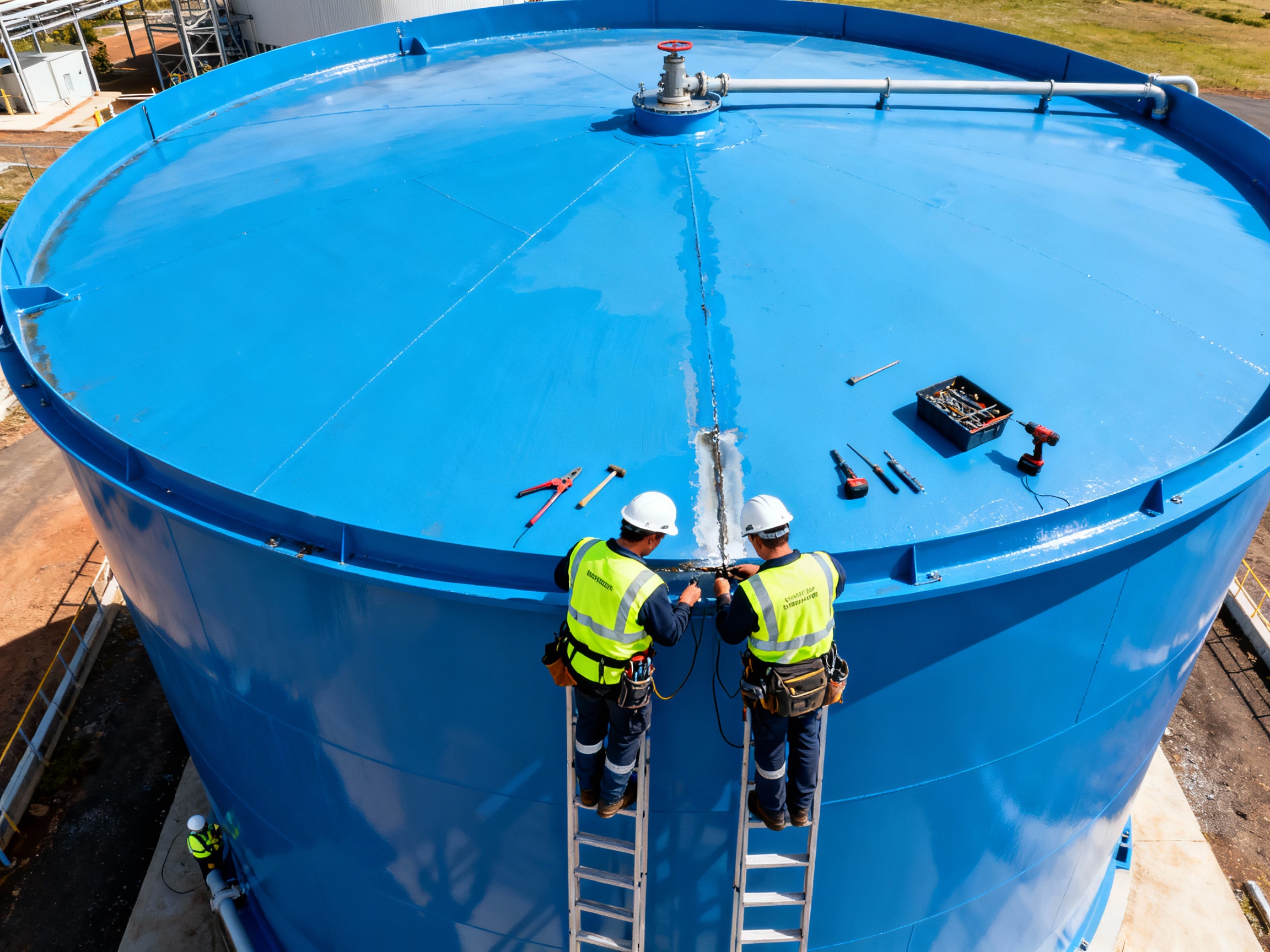
- Tank Shell Condition: Inspect for surface rust, corrosion, dents, or structural damage. Pay attention to weld seams or joints for signs of weakness.
- Coating and Protective Layers: Check paints and protective coatings for peeling or damage that could expose metal to corrosion.
- Roof and Roof Supports: Look for sagging, leaks, or debris accumulation on tank roofs or covers.
- Vents and Overflows: Confirm vents are unblocked and functioning properly to allow for air displacement during filling or emptying. Calculating the minimum and maximuminfill flow rate against the size and type of overflow to help prevent flooding of the building.
- Safety Signage: Verify signage is visible, up-to-date, and compliant with safety regulations.
- Accessibility: Ensure ladders, walkways, and handrails are secure and unobstructed.
Internal Inspection Checklist
Internal inspections typically require qualified personnel, licensed plumbers and commercial divers are required to assess conditions and compliance with all relevant Australian Standards while tanks remain in operation to prevent service disruption.
- Sediment Levels: Measure sediment / sludge deposits on tank floors as excessive buildup can reduce effective water capacity and harbor contaminants or blockages.
- Contamination: Look for signs of algae growth, microbial contamination, foreign debris and occasionally dead animals and reptiles that compromises water quality.
- Liner Condition: Examine tank liners for tears, bulges, brittleness, cracking, slippage, or other damage that could cause leaks.
- Mechanical Components: Inspect bolts, flanges, valves, and pipework for corrosion, leaks, or mechanical wear.
- Structural Integrity: Assess internal supports and walls for cracks or deformation that could compromise tank safety.
Functional Testing
Testing the operability of key components ensures the tank’s firefighting capability is unimpaired.
- Valve Operation: Check all valves for freedom of movement, leaks, and proper closing and sealing functions. Ensure all gaskets and liners are also secure and not restricting flow to any of the tank outlet/s.
- Measure: Measure the tank to confirm effective capacity on each tank, the anti-vortex plates, overflows, air-gaps and all other normative requirements specific to AS/NZS3500.1, AS2304, AS2419 or AS2118.
- Tactile assessment: physically check for loose components, bolt tightness, brittleness of liner, water being trapped behind the liner / bulging, subsidence and foundation cracks, eyelet attachments, mechanical fixings, leaks, cuts and tears of the liner (including beneath or behind liner folds) and remove all larger foreign objects as quickly as possible.
- Flow Testing: Conduct flow tests in line with AS1851 protocols to confirm that water delivery capacity meets fire safety requirements and approved design criteria.
- Pressure Gauge Accuracy: Validate pressure gauges and sensors for correct readings and responsiveness.
- Alarm and Monitoring Systems: Verify that any connected monitoring equipment is functional and correctly calibrated (where required).
Reporting and Documentation
Accurate reporting is critical for demonstrating compliance and guiding maintenance decisions:
- Detailed Reports: Include descriptions of findings, photographs, video footage, and recommendations for any remedial work. Before and after photos and videos are key to ensure that all mandatory tasks have been completed.
- Compliance Records: Maintain logs and reports in editable and accessible formats that match or exceed the minimum items outlined in AS1851 for audit purposes.
- Transparency: Use video documentation to provide clients and regulatory bodies with clear evidence of inspection quality and thoroughness from start to finish.
Post-Inspection Actions
After inspections, swift follow-up ensures issues don’t worsen and fire system remains compliant:
- Maintenance Scheduling: Organize cleaning, repairs, or parts replacement based on the inspection outcomes.
- Reinspection Planning: Set timelines for follow-up inspections, particularly if significant issues were identified.
- Continuous Monitoring: Establish routine checks to monitor sediment buildup or mechanical wear between formal inspections.
For professional maintenance and cleaning services, visit our Fire Tank Cleaning page.
Tips for Effective Inspection Programs
- Regular Scheduling: Schedule inspections according to compliance guidelines and facility risk profiles to avoid lapses.
- Qualified Personnel: Always engage licensed and experienced inspectors, plumbers and divers to ensure safety and effective assessments.
- Leveraging Technology: Adopt live stream video from divers face mask to allow streaming of all works (start to finish) carried out inside the tanks. This provides full transparency, allowing for engineering engagement live and a permanent digital file for any potential warranty or insurance claim.
- Client Communication: Provide clear, understandable reports and recommendations to clients or facility management for informed decision-making.
Conclusion
A thorough fire tank inspection checklist is indispensable for assuring the safety, compliance, and operational readiness of fire water storage tanks. Following this detailed guide helps businesses meet the stringent requirements of Australian standards while safeguarding property and lives.
For expert inspection and maintenance solutions, trust Fire Tanks Australia to deliver professional, licensed services tailored to your facility’s needs.
Frequently Asked Questions (FAQs)
Q1: How often should fire tanks be inspected?
Fire tanks require inspections every month, as outlined in the Australian Standard AS1851-2012, with more frequent checks if sediment or other risks are detected.
Q2: Can fire tanks be inspected without draining the water?
Yes, licensed commercial divers working alongside our plumbing team can inspect tanks while they remain full, reducing any downtime and water being wasted.
Q3: What is included in a fire tank inspection?
A comprehensive inspection covers external tank condition, internal sediment levels, liner integrity, valve operation, and compliance documentation that aligns with AS1851 and relevant design and installation standards.
Q4: Why is documentation important after inspection?
Detailed reports with photos and videos provide necessary evidence for regulatory compliance and insurance purposes. Any tank repairs and cleaning carried out should be providing both before and after photos / video. The documentation under AS1851 is required to be made available for 7years.
Q5: Who should perform fire tank inspections?
Only licensed and qualified professionals, including commercial divers and plumbers certified in fire safety inspections, should conduct these inspections.