
Maintaining potable water tanks plays a critical role in ensuring a safe, clean, and compliant supply for residential, commercial, and industrial use throughout Australia. Given their importance in storing water free from contaminants, potable water tanks must adhere to stringent Australian standards and regulations. These measures protect not only water quality but also public health by preventing waterborne diseases and ensuring reliability in supply.
Australian Standards for Potable Water Tanks
Potable water tanks in Australia are governed by several key standards, including the Australian Drinking Water Guidelines (ADWG), AS1851 for maintenance of related systems, and AS/NZS 3500 for plumbing and drainage. These standards define strict protocols for inspection, cleaning, repair, and certification, supporting ongoing compliance and functional integrity.
Inspection and Maintenance Protocols
Routine inspection is essential to identify early signs of damage, contamination, or component failure. Typical maintenance schedules recommend visual inspections every six months and thorough internal cleaning every 2 to 3 years. Cleaning minimises sediment buildup, algae growth, and microbial contamination, in line with ADWG recommendations.
Water Quality Monitoring
Regular water testing is required to ensure drinking water safety, checking for microbial content, chemical pollutants, and physical parameters. Compliance with water quality standards mitigates health risks and supports regulatory certification.
Secure and Safe Infrastructure
Potable water tanks must be secured with appropriate lids, screens, and access points to prevent contamination from insects, animals, and debris. Screen mesh size and secure fittings are specified to align with health department regulations.
Plumbing and Installation Compliance
The installation and plumbing connections must conform to AS/NZS 3500 standards, ensuring secure connections and backflow prevention. Licensed plumbers should conduct or verify all work to maintain compliance.
Proactive Approach Ensures Long-Term Reliability
Adopting a regular, proactive maintenance regime supported by certified professionals helps extend tank lifespan, reduce risk of failures, and maintain continuous safe water supply. Documentation of all maintenance and repairs is critical for audits and compliance verification.
Common Issues Requiring Repairs
1. Structural Integrity and Leaks
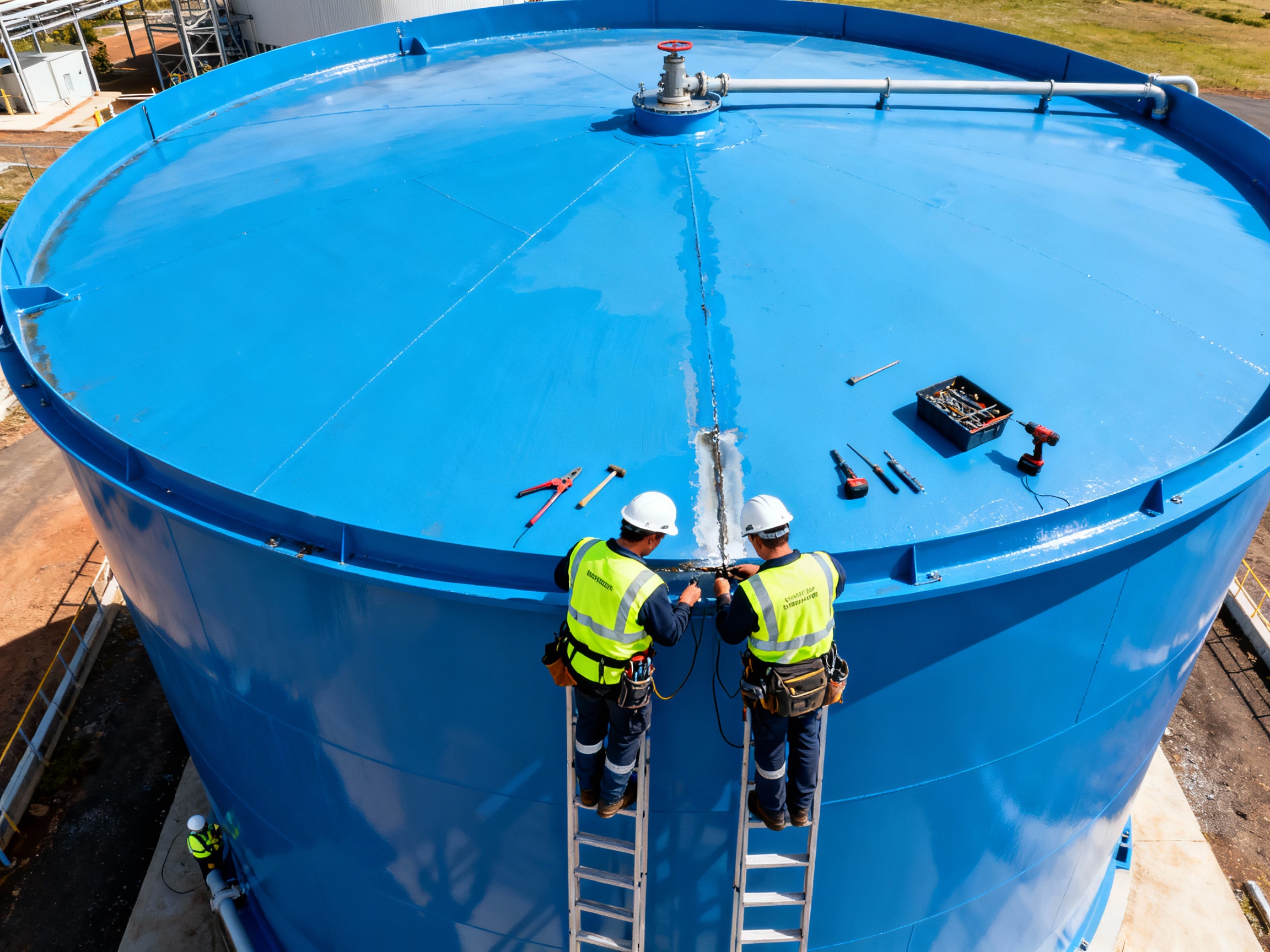
Cracks, leaks, or structural damage can compromise the tank’s ability to store clean water safely. Such damage may result from natural wear, shifting ground, or accidental impacts.
Solution: Prompt repair of any breaches using certified materials and techniques is essential to prevent contamination and water loss. Licensed professionals should inspect and repair tanks following local regulations.
2. Contamination and Sediment Buildup
Accumulation of sediment, algae, or microbial growth inside the tank threatens water quality.
Solution: Regular cleaning and desludging, alongside water quality testing consistent with Australian Drinking Water Guidelines (ADWG), ensure tanks remain safe. Scheduled maintenance reduces repair frequency and prolongs tank life.
3. Plumbing and Fittings Compliance
Incorrect or degraded plumbing components can introduce contamination or fail compliance checks.
Solution: All plumbing work should be conducted by licensed plumbers adhering to AS/NZS 3500 standards, ensuring backflow prevention, proper overflow management, and secure pipe connections.
4. Access and Security
Tanks must have secure lids and openings to prevent ingress of insects, animals, or dirt, which are sources of contamination.
Solution: Replace or repair lids and access points with designs that comply with health regulations. Mosquito-proof screens and sealed openings are mandatory.
Compliance Standards and Best Practices
Australian standards such as AS1851, AS/NZS 3500, and guidance from state health departments dictate inspection schedules, repair protocols, and maintenance practices for potable water tanks. Following these ensures legal compliance and safe water supply.
Regular inspections by qualified technicians, including non-destructive testing and documentation of repairs, are vital components of compliance.
FAQs About Potable Water Tank Repairs
Q1: How often should potable water tanks be inspected?
Inspections are typically recommended every 2-3 years, or more frequently based on usage and environmental conditions.
Q2: Can I perform repairs myself?
Minor cleaning and maintenance may be performed by owners, but repairs affecting tank integrity or plumbing must be done by licensed professionals.
Q3: What are the risks of delayed repairs?
Unchecked damage can lead to contamination, water loss, and potential health hazards.
Q4: Are repairs covered by regulations?
Yes, repairs must comply with Australian standards to maintain certification and water safety.
Q5: How do I ensure my repair service is compliant?
Choose service providers accredited with relevant Australian certifications and licences.
Q6: What testing is required post-repair?
Water quality tests aligned with Australian Drinking Water Guidelines are essential after repairs.
Q7: What materials are approved for potable water tank repairs?
Only food-grade, non-toxic materials certified under local regulations should be used.
Q8: How do I maintain compliance long-term?
Adopt a proactive maintenance schedule with regular inspections, cleaning, and timely repairs per AS1851.
For professional potable water tank maintenance and repair services compliant with Australian standards, visit Fire Tanks Australia Maintenance.
External reference: Australian Drinking Water Guidelines (ADWG) – NHMRC ADWG.